I knew I’d lost control the day I pulled my old Chevy S10 onto the shoulder of the interstate, one hand on the wheel and the other fishing under the seat for one more pint I didn’t even want.
I was sick of it. I was crying while unscrewing the cap anyway.
The thing with addiction is that you dress compulsion up as choice and call it freedom. You claim control while handing it away.
That’s where I start because the same trap that nearly wrecked my life is swallowing our politics.
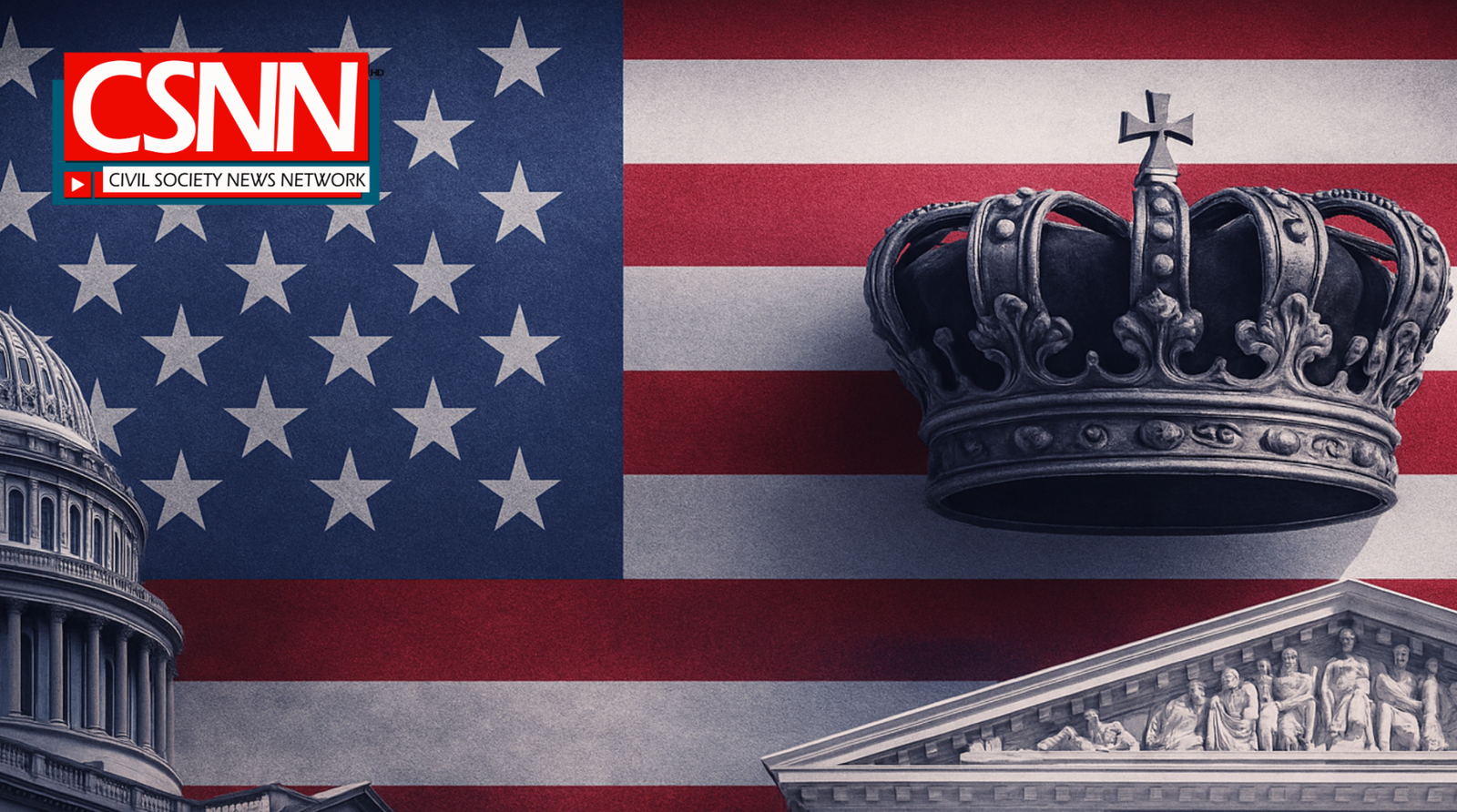
We are a country telling ourselves a flattering story while giving our power to whoever flatters us most. We drape the language of fidelity, “originalism,” “founders’ intent,” “rule of law”—over a reality the framers would not recognize. A presidency wrapped in near-royal insulation, a Congress choosing party over country, and a Supreme Court majority claiming to channel 1787 while chiseling out 2025 exceptions for a single man.
We are becoming experts at the ritual of constitutional reverence and the practice of constitutional betrayal.
And it’s in that gap between the story we tell ourselves and the system we keep, is where republics go to die.
What The Framers Actually Feared
Those men in that hot Philadelphia hall weren’t vague about their nightmare. They had just listed King George III’s abuses in the Declaration of Independence. They knew what unchecked power looked like.
James Madison didn’t whisper it; he practically shouted it in ink:
“The accumulation of all powers, legislative, executive, and judiciary, in the same hands… may justly be pronounced the very definition of tyranny.” — Federalist No. 47
Thomas Jefferson said the same thing in plainer language: put all the powers in the same hands and you don’t have a republic, you have despotism. “It will be no alleviation,” he wrote, “that these powers will be exercised by a plurality of hands…. 173 despots would surely be as oppressive as one.” — Notes on the State of Virginia
They didn’t hate just kings. They hated concentrated power, whether it wore a crown, a robe, or a smile.
That’s why, when James Wilson suggested a single executive, the room fell into what one delegate called a “considerable pause.” George Mason warned that if “strong and extensive powers” were vested in one person, “the Government will of course degenerate into a monarchy.” Even Alexander Hamilton, who wanted a stronger executive than most, admitted that a president “during good behaviour” would look a lot like “an elective monarchy.” The convention said no. As historians Holly Brewer and Thomas Wolf documented in their friend-of-the-court brief challenging Trump’s immunity claims, the founders argued “at no point did they seek to endow the President with prerogatives that would make him an ‘elective King.’”
The entire Constitution’s architecture is a treatment plan for power: separate it, check it, make it jealous of its neighbors, and don’t let it get too comfortable anywhere. Madison called it “ambition counteracting ambition.”
John Adams put it even more bluntly: “Power must never be trusted without a check.”
The framers weren’t building a throne and calling it a chair. They were building a room where three chairs would always scrape against each other with no one ever relaxed enough to fall asleep.
Originalism As Costume
If you really look at it, Originalism is a doctrine of humility.
Don’t make the Constitution say what you want it to say. Read it the way the ratifiers would have understood it. Put the law on the basis of text and history and structure, not upon a Judge’s politics.
I can live with that. I believe most Americans can, if that’s what we were actually getting. But look at the pattern, not at the press conference.
When the Court’s conservative bloc expansively reads Article II to place a former president beyond ordinary criminal accountability for “official acts,” that is not humility. That’s a carve-out. When they elevate an extreme “unitary executive” theory to let one man bend the entire executive branch to his will, that isn’t faithful restraint. That’s a design change.
The framers did not bury a crown in the Vesting Clause, like a cereal box surprise.
They debated and rejected the idea of an “elective king.” They assumed that a president could be prosecuted after leaving office. They built impeachment, oversight, and elections into the system precisely so that official power would never become a magic shield against accountability.
Yet in Trump v. United States, the Court’s majority announced that presidents have absolute immunity for “core” constitutional powers and presumptive immunity for other official acts. In dissent, Justice Sonia Sotomayor spelled out what that means in practice. Under the majority’s logic, a president who uses the machinery of office to assassinate a rival, take a bribe for a pardon, or cling to power by force could be insulated from criminal prosecution.
In plain English, the more power you have, the less accountable you are.
That is not the founders’ logic; that is the logic of a monarchy.
The same group that scolds Congress for writing vague statutes now treats the Constitution’s brevity on executive accountability as a blank check. The same justices who insist words mean what they meant, then wave away the founders’ open fear of concentrated power when it stands in the way of presidential insulation.
Originalism without structural honesty is costume. From a distance, it looks like 1787, but the seams split the moment you tug on the fabric.
The Unitary Mirage: When One Man Becomes “The Executive”
If you wish to consolidate power in a hurry, here’s the recipe: declare that the president is, for all practical purposes, the whole executive branch.
If every officer answers to him, if watchdogs serve at his pleasure, if “independent” becomes an archaic phrase instead of our living reality, then oversight becomes an unwelcomed courtesy and courage becomes unemployment.
That’s the heart of the unitary executive theory: it sells itself as clarity, one president, one branch, one chain of command—no messy buffers, no friction, clean lines.
But the framers were not confused; they were cautious. They wanted friction.
They knew that in certain spaces like elections, investigations, financial regulation, and public health, the temptation to weaponize power is strongest and the need for public trust is most acute.
It is for that reason that Congress created independent agencies and for-cause removal protections: not to make bureaucrats comfortable but to keep presidents from turning referees into cheerleaders.
When the Court tears down those guardrails in case after case, and a president waves Article II like a permission slip to purge anyone who crosses him, we are not “restoring the framers’ design.” We are rewriting it in real time. As constitutional scholar Caleb Nelson, a respected originalist and former clerk to Justice Clarence Thomas—recently argued, the unitary executive interpretation is “far more equivocal than the current Court has been suggesting.”
Liberty doesn’t live on straight lines. It lives in the friction the framers built on purpose.
Congress: The Branch That Forgot It’s A Branch
The framers did not trust parchment alone. They trusted psychology. They assumed people in each branch would guard their turf like a family heirloom.
Give each branch, Madison wrote, “the necessary constitutional means and personal motives to resist encroachments of the others,” and self-interest will become civic virtue. Protect your corner and you accidentally protect the country.
That assumption has been blown apart.
Too many in Congress wear their party jersey above their institutional oath. When their party holds the White House, they don’t check the executive; they cheer it on. They don’t jealously guard legislative authority, they outsource it, then rage-tweet about overreach.
A Congress that won’t legislate constraints, has no teeth, won’t oversee with courage, and won’t impeach lawless behavior when it is politically inconvenient. It is not a coequal branch; it is a studio audience.
This isn’t a small cultural shift; it is a structural failure.
When Congress refuses to be Congress, the president doesn’t even have to seize power; it’s handed to him, neatly wrapped, with a card that reads, “Use as you see fit.”
And when the Court blesses that handoff with doctrines that centralize control of the executive branch and sterilize accountability for “official acts,” the circle closes. The checkers stop checking. The balancers stop balancing.
We cannot continue to pretend that this is a normal partisan tug-of-war. It is something more dangerous. A slow, willing surrender of the very rivalry which the framers engineered as our safety valve.
When Courts Become The Enemy
There was one more piece to the framers’ safety system. An independent judiciary.
It is the judges with lifetime tenure who were supposed to say “no” when everybody else said “go.” They were the backstop you hit when executive ambition and legislative cowardice lined up on the same side.
Today, that backstop is under coordinated attack.
When judges rule against the administration, they are called “lunatics,” “monsters,” “Marxists,” and “radical left” agitators. Impeachment gets thrown around on talk shows as a response to unpopular rulings, not actual judicial misconduct. Federal judges receive threats serious enough that even Trump-appointed jurists are asking Congress for more security and warning that the “threat environment” is unlike anything they’ve seen.
Most alarming, though, we are seeing deliberate defiance of court orders, as agencies delay, reinterpret plain language, or fail to comply altogether, betting that the Supreme Court will bail them out with an emergency order on the shadow docket.
And all too often, it does.
As Justice Sotomayor said in one of her dissents, “Each time this Court rewards noncompliance with discretionary relief, it further erodes respect for courts and for the rule of law.”
Here’s the quiet truth most people don’t realize…judges don’t have an enforcement arm of their own. The U.S. Marshals Service sits in the executive branch. When a president decides, implicitly or explicitly, that certain orders don’t really need to be followed, the judiciary’s authority depends on norms, not muscle.
Strip away those norms, and even the most beautifully reasoned opinion is a suggestion. The founders would recognize this dynamic in an instant. King George III didn’t start by burning constitutions. He started by ignoring them.
“No Kings” And The New Definition Of “Un-American”
If there’s any phrase that captures the founding generation’s mood, it is this: No kings.
From the Boston Tea Party to the Declaration of Independence, the entire American experiment was a revolt against the idea that any one person could stand above the law.
Thomas Paine wrote in Common Sense, “In America, the law is king.”
So when millions of Americans march in peaceful “No Kings” rallies to protest the obvious and creeping authoritarianism, they are standing squarely in that tradition. They are doing precisely what the First Amendment protects, peaceably assembling and petitioning their government for course correction.
To have leaders turn around and call those rallies “un-American,” and “hate America” events, or the work of a “terrorist wing” is more than insulting, it’s historically illiterate at the very least. And it is telling to what side of democracy those people are truly on.
You don’t have to agree with every sign or every slogan to see the bigger picture. People are afraid of concentrated power. They see a presidency edging toward impunity, a Congress that won’t cross its own party, and a Court rewriting accountability as fragility. They don’t want a king, elected or otherwise.
That isn’t anti-American. It’s the most American instinct we have left.
The Moral Middle We Walked Away From
There’s a phrase I come back to, because it saves me from my worst impulses:
Unity does not mean uniformity.
We don’t have to agree on everything to agree on first principles. Actually, the framers assumed we wouldn’t agree on everything, which is why they designed a system that runs on disagreement but crumbles on contempt.
The moral middle of the Constitution is not gray. It is hard and bright.
No man is above the law.
Power must never be trusted without a check.
Ambition must be made to counteract ambition.
The people govern by means of separated, rivalrous powers, so that no single hand can close into a fist.
That is not left or right; that is American.
You can be conservative and defend that grammar. You can be liberal and defend that grammar. But you can’t be an “originalist” while erasing the very sentence structure the founders wrote to keep any one of us from “becoming drunk with power.”
When your constitutional philosophy keeps producing a more-insulated presidency than that which the founders rejected in the British monarch, your method is broken.
If your devotion to a party requires you to rename cowardice as courage and abdication as “support,” your loyalty has wandered from the parchment to the pennant.
What a Republic with a Spine Would Do
None of this is hopeless. The framers didn’t just leave us warnings. They left us tools. If Congress wanted to be Congress again, it could still legislate clarity on presidential accountability. They can establish that no label of “official act” can cloak abuses of power, most particularly efforts to subvert elections, obstruct justice, or turn public power into private gain.
They could rebuild statutory independence where it matters most. Reinforce for-cause removal protections for inspectors general, special counsels, and key regulatory chairs. Make it hard, not impossible but hard, to fire the people whose job it is to tell the country inconvenient truths.
Reclaim the power of the purse and make appropriations depend on cooperation with oversight. No funds for agencies that stonewall lawful subpoenas, or defy court orders.
If Congress continues to write vague, sweeping grants of power, presidents will continue to stretch them. Make lawmakers own the policies they outsource.
If the Court wished to respect the framers’ structure as well as their sentences, it could recognize that silence on immunity by the Constitution is not an overt grant of it.
Read “executive Power” as a list of duties, not a personal force field.
Recognize Congress’s authority to create pockets of independence within the executive branch when the public interest, and the framers’ fear of tyranny, require it.
And if we, the people, wanted to act like owners of a republic again, we could be more careful with our gasoline. Outrage is easy, and addictive. It burns hot and it leaves you in the dark.
Be willing to be water. Cool down conversations, ask more questions than we answer, separate policy disagreements from existential threats. Demand policy wins along with constitutional guardrails. Refuse to take the deal that you have to trade the health of the system for victories for your team.
A victory that requires handing any one man the tools of impunity is not a victory.
Road to Recovery
I go back, sometimes, to that day on the shoulder of the interstate. I remember what it felt like to realize that the story I’d been telling myself, “I’m fine, I’ve got this, I’m in control”, was a lie.
The recovery started when I told the truth about what I was doing to myself.
Our politics needs that same humility.
We can continue to reach under the seat for one more swig of certainty, one more exception for our guy, one more rationalization for why this time concentration of power is safe because it’s our hands holding it.
Or we can pull over, take the keys out, and decide together that the road ahead belongs to a people who refuse to be ruled by a person. Unity doesn’t mean uniformity. It means we agree on the essentials.
Here they are, simple enough to memorize:
No crown.
No man above the law.
No party above the country.
No branch above the others.
No freedom without friction.
So if we can hold that line, then we’ll deserve the title our better angels gave us to begin with. We will not just be the United States in name but we can become the Re-United States of America. A people who remembered just in the nick of time that the Constitution wasn’t written to empower a hero. It was written to protect us from the day we were told we needed one.
Author:
Mr. James Marlin
Journalist & Contributor (USA)
